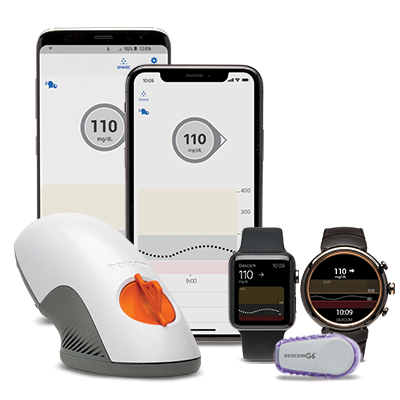
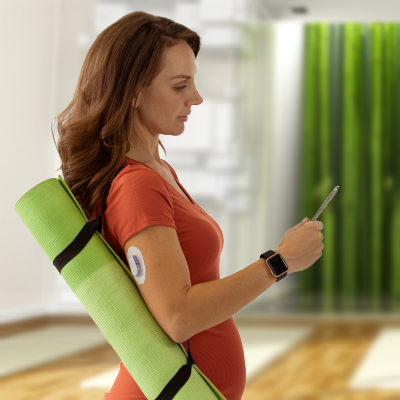
The Dexcom SEVEN PLUS Continuous Glucose Monitor can help show you the way to achieve better diabetes control.
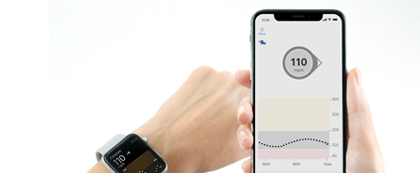
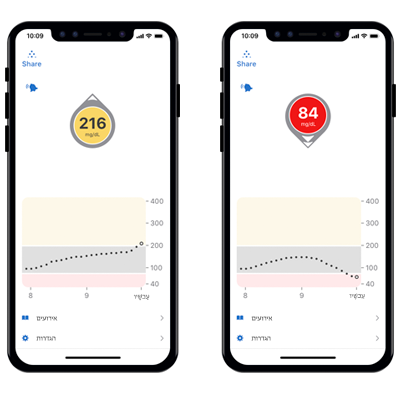
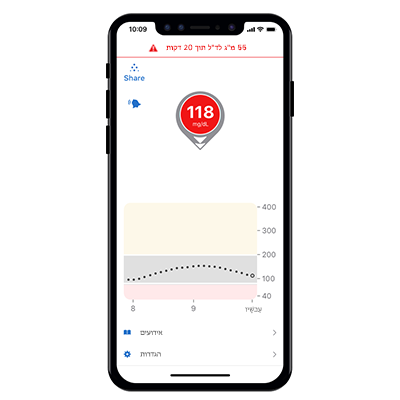
Your glucose is constantly changing, and the Dexcom SEVEN PLUS CGM continuously measures your glucose. You can get up to 288 glucose readings a day, one every 5 minutes. With trending graphs and rate-of-change arrows, you know where your glucose is, where it's going, and how fast it is getting there. It may help prevent a high or low before it happens.
CGM can help reduce hypoglycemia, protect from hypo-unawareness, and help achieve target A1c without adding hypoglycemia.1,2
Fingersticks vs. CGM
|
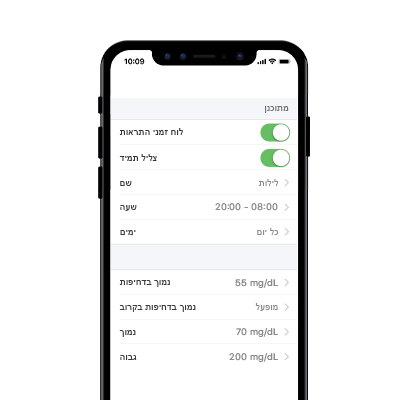
![]() Know your current glucose level at all times ![]() Be more proactive with trend and rate-of-change arrows ![]() Take action with High & Low alerts & alarms ![]() See the full picture of your glucose with trend graphs |
Convenience, Performance and Simplicity
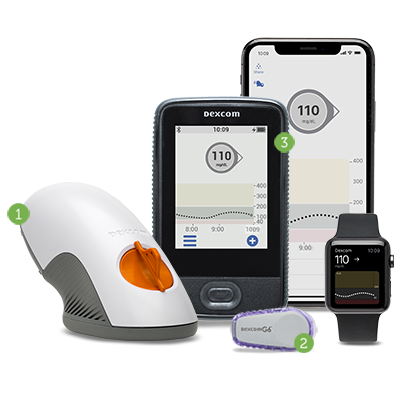
The SEVEN PLUS CGM is an easy-to-use wireless device that is designed to simplify your glucose management.

Sensor
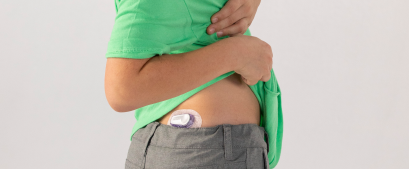
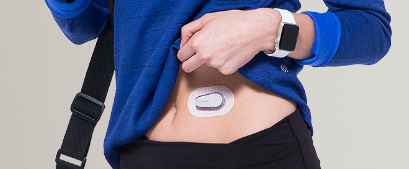
The Sensor is a flexible, round, & miniature wire that you insert under your skin to read glucose levels, and attaches to the skin with its adhesive patch. This is the only sensor approved for up to a full week of wear.
Transmitter
The Transmitter is a technology that wirelessly sends glucose information to the Receiver every 5 minutes. The Transmitter snaps into the Sensor to form a small and discreet pod that is wireless and lightweight.
Receiver
The Receiver is a wireless device that displays glucose trends so you can quickly and easily see where your glucose has been, where it is, and where it's heading. At about the size and weight of a cell phone, you can clip the Receiver to your belt, put it in your pocket or handbag.
- Garg SK, Kelly WC, Voelmle MK, et al. Continuous home monitoring of glucose: improved glycemic control with real-life use of continuous glucose sensors in adult subjects with type 1 diabetes. Diabetes Care. 2007;30(12):3023-3025.
- Juvenile Diabetes Research Foundation Continuous Glucose Monitoring Study Group. Continuous glucose monitoring and intensive treatment of type 1 diabetes. N Engl J Med. 2008; 359(14): 1464-1476.