
Smart Glucose Meter
Hypoglycemia and Pregnancy: How to Prevent Low Glucose
Published: Aug. 25, 2026
7 min read
Pregnancy impacts hormones in the body that play an important role in blood sugar, or glucose management, which can increase the likelihood of experiencing low blood sugar, known as hypoglycemia.1 Seventy-one percent of women living with type 1 diabetes (T1D) experience hypoglycemia during pregnancy.1 Those living with T1D have a higher risk of experiencing hypoglycemia during the first trimester.1 People experiencing gestational diabetes, especially those using insulin therapy or diabetes medication, may also be at risk of hypoglycemia.1,2
Learning more about what can cause hypoglycemia during pregnancy and the symptoms to look out for empowers you to take steps that help you prevent hypoglycemia. Using technology like a continuous glucose monitoring (CGM) system can simplify glucose monitoring and give you a better understanding of what impacts your glucose, even as your body changes throughout your pregnancy.
What causes hypoglycemia during pregnancy?
Expectant mothers who use insulin therapy and those taking glucose-lowering medications may be more likely to experience hypoglycemia.1,2 Low glucose can happen when you have taken too much insulin or diabetes medication compared with the amount of carbohydrates, or carbs, you’re eating or your level of physical activity during the day.2
Skipping snacks and meals or not eating enough carbs can cause hypoglycemia.2 Engaging in physical activity without adjusting your insulin doses accordingly can also contribute to lows.2 Vigorous exercise increases insulin sensitivity, which can help lower glucose levels post-workout and keep your glucose low for up to 48 hours afterwards.3
Be aware that even physical activities that are part of your everyday routines, like walking up the stairs with groceries, running after your dog or your child, or scraping ice off your windshield, can cause glucose levels to drop.
Common symptoms of low blood sugar during pregnancy
Diabetes Canada defines hypoglycemia as a glucose level below 3.9 mmol/L. Hypoglycemia impacts everyone differently, and you may experience low glucose symptoms even if your readings are higher than 3.9 mmol/L.4 Pregnancy causes a lot of changes in the body, and you may find that low glucose may present differently than what you’re used to.
Just a few common signs that could indicate that you’re experiencing low blood sugar while pregnant include:5,6
- Sweating
- Shaking
- Having a headache
- Looking pale
- Feeling very hungry
- Experiencing nausea
- Having a fast or irregular heartbeat
- Feeling weak or fatigued
- Feeling irritable or anxious
- Having trouble concentrating
- Experiencing dizziness or lightheadedness
- Having tingling or numbness in your lips, tongue, or cheeks
Serious hypoglycemia can come with symptoms that affect your brain and behaviour, known as neuroglycopenic symptoms, which may include:5,6
- Feeling confused or disoriented
- Behaving abnormally, for example, being unable to complete routine tasks
- Losing coordination
- Slurring speech
- Experiencing blurry vision or tunnel vision
- Having nightmares, if you’re asleep
How to know if you’re experiencing hypoglycemia
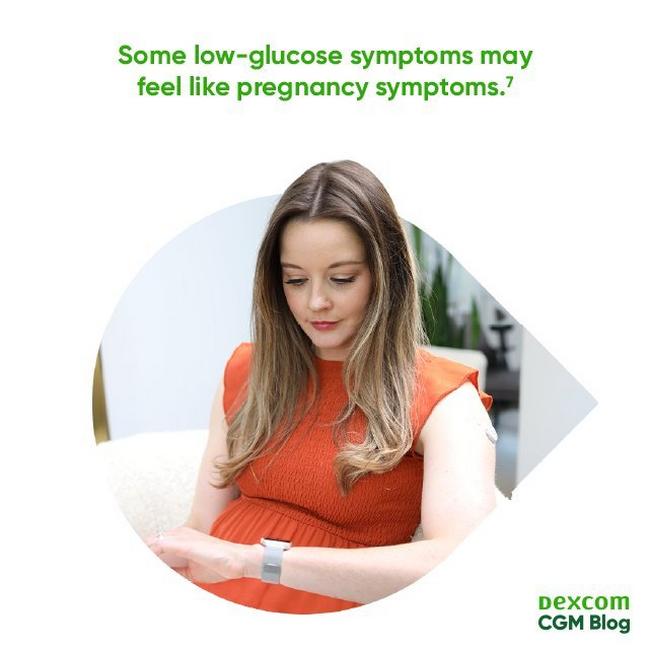
It’s not always easy to know if you’re experiencing hypoglycemia, especially during pregnancy. Some signs of hypoglycemia are very similar to symptoms that can come up during pregnancy.6,7 This can include nausea, fatigue, feeling hungrier than normal, and having headaches or dizzy spells.7 If you’re experiencing these types of symptoms, you may not realize you’re experiencing low glucose if it happens.
Another factor that can make it difficult to know when you’re going low is hypoglycemia unawareness, also called hypo unawareness. Many people who have lived with diabetes for a long time, especially those using insulin therapy, experience hypo unawareness. About 25 percent of those living with T1D and around 10 to 15 percent of those living with T2D develop hypo unawareness.8 It happens when the body gets used to experiencing low glucose and stops showing symptoms when glucose levels drop.9,10 This makes it challenging to catch lows.
Using the Dexcom G7 CGM System can give you insight into where your glucose is headed and provide proactive glucose alerts on your compatible smartphone, smartwatch, or handheld receiver.* In addition to the built-in Low Glucose alert that notifies you when your levels drop below 3.1 mmol/L, Dexcom G7 can provide a predictive Urgent Low Soon alert that can let you know up to 20 minutes before you’re likely to experience a low under 3.1 mmol/L.†
Dexcom CGM is proven to help those living with T1D who experience hypo unawareness reduce the frequency of hypos. Diabetes Canada also recommends that those experiencing hypo unawareness should use CGM to support their glucose management.
Treating hypoglycemia when it happens
Be sure to talk to your doctor about the best ways to treat hypoglycemia during pregnancy, especially if you’re experiencing gestational diabetes and using insulin therapy for the first time.
For those living with diabetes, Diabetes Canada generally suggests treating hypoglycemia with 15 g of fast-acting carbohydrates.4
Some recommended options for fast-acting carbs include:4
- Four 4g glucose tablets
- 15mL (3 tsp) or three packets of table sugar dissolved in water
- Five sugar cubes
- 150mL fruit juice or soft drink
- 15mL (1 tbsp) of honey
According to Diabetes Canada recommendations, it’s a good idea to test your glucose levels 15 minutes after consuming fast-acting carbs to check whether you’re still low.4 If your next planned meal is more than one hour away, Diabetes Canada suggests eating a snack that includes 15 g of carbs and protein.4
How to prevent hypoglycemia during pregnancy
Adjusting or building new diabetes management habits during pregnancy can help you stay in your ideal range and reduce the risk of low glucose. Here are just a few things you can do to help prevent low glucose throughout your pregnancy:
1. Discuss your insulin or medication dosing routine with your care team
If you’ve been using insulin or glucose-lowering medication to manage diabetes, it’s important to discuss whether your insulin or medication needs will change throughout your pregnancy. Giving yourself the right amount of insulin or medication can help keep you in your ideal range as often as possible.
2. Stick to a predictable meal and snack schedule
You may also want to speak with a diabetes dietitian about your meal and snack routines. Pregnancy can come with cravings and food aversions. A dietitian can help you adapt your diabetes diet to ensure you meet your body’s energy and nutrition needs. You can also talk about how often you should eat during the day to support your glucose levels. Eating at around the same times throughout the day can make it easier to manage your glucose.
3. Keep fast-acting carbs and snacks with you on the go
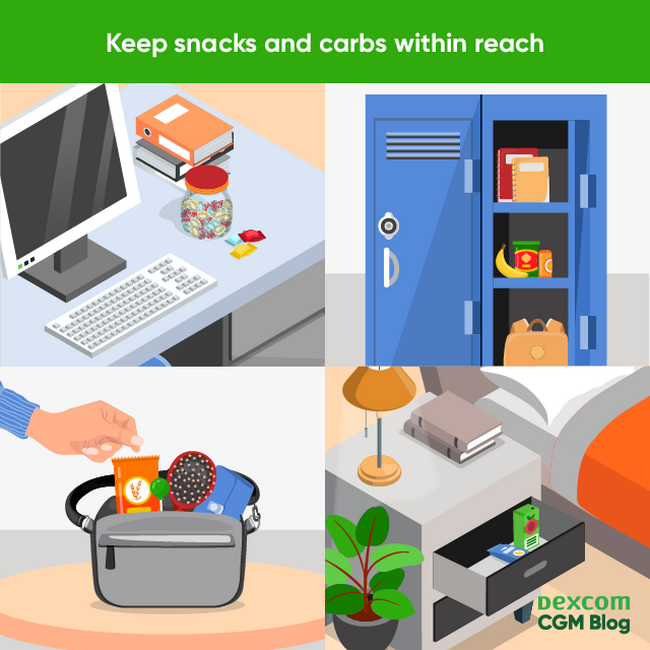
It’s smart to plan ahead and ensure that you have snacks and fast-acting carbs with you wherever you go. You may want to keep snacks in your bag, your glove box, at your desk or near you at work, and in different areas around your house. This allows you to treat lows as quickly as possible in the moment, even if you’re navigating a hectic day or stuck in traffic, and prevent severe hypoglycemia.
4. Be mindful of how physical activity impacts your glucose
Staying active during pregnancy can help you manage your glucose, support your overall well-being, and contribute to a healthy pregnancy and delivery.11 Be sure to keep an eye on how physical activities impact your glucose and talk to your care team about how you should adjust your insulin doses around workouts, walks, yard work or chores, and playing with kids or pets.
5. Use a CGM system to get support with glucose monitoring
A CGM system like Dexcom G7 can make it a little easier to know what’s happening with your glucose levels throughout the day, and at night. With Dexcom G7, you can get a real-time view into your glucose levels and proactive alerts before you go low, so you can take action in the moment to stay in your ideal glucose range. With glucose readings in the palm of your hand, you can see how factors like meals and snacks, physical activity, stress, and sleep affect your glucose.
MAT-13114Keeping your glucose levels within your ideal range as often as possible can help reduce the risk of complications and support a healthy pregnancy and delivery for both mother and baby.12,13
Using Dexcom G7 can also give you and your care team insight into how your body’s needs are changing throughout your pregnancy. This gives your team the chance to ensure your diabetes treatment plan evolves with you. Dexcom G7 has been shown to help identify the need for treatment changes during pregnancy better than blood glucose meter (BGM) testing alone.14,15 For those experiencing gestational diabetes, Dexcom G7 has also been shown to help care teams determine whether to introduce insulin therapy.11,14,16
Stay in the know about low glucose during pregnancy with Dexcom G7
Dexcom G7 is the only CGM system approved for use during pregnancy in Canada. If you’re living with diabetes and thinking about starting or growing your family or experiencing gestational diabetes, you may want to talk to your doctor about whether Dexcom G7 will fit into your prenatal diabetes management plan.
* Smart devices sold separately. For a list of compatible smart devices, please visit www.dexcom.com/compatibility.
† This predictive alert can be triggered with impending hypoglycemia (glucose of 3.1 mmol/L or below is predicted to occur within the next 20 minutes).
1 Feig DS, et al. Can J Diabetes. 2018;42 Suppl 1:S255-S282.
2 HealthLinkBC. Gestational diabetes: Dealing with low blood sugar. HealthLinkBC. Updated March 1, 2023. Accessed March 17, 2026. https://www.healthlinkbc.ca/healthwise/gestational-diabetes-dealing-low-blood-sugar
3 Exercise and activity. Diabetes Canada. Accessed March 17, 2026. https://www.diabetes.ca/nutrition-fitness/exercise-activity
4 Lega IC, et al. Can J Diabetes. 2023;47(7):548-559.
5 Hypoglycemia (low blood sugar). Cleveland Clinic. Updated January 31, 2023. Accessed March 17, 2026. https://my.clevelandclinic.org/health/diseases/11647-hypoglycemia-low-blood-sugar
6 Hypoglycemia: Symptoms and causes. Mayo Clinic. Updated November 18, 2023. Accessed March 17, 2026. https://www.mayoclinic.org/diseases-conditions/hypoglycemia/symptoms-causes/syc-20373685
7 Am I pregnant? Early symptoms of pregnancy & when to test. Cleveland Clinic. Updated July 26, 2022. Accessed March 17, 2026. https://my.clevelandclinic.org/health/articles/9709-pregnancy-am-i-pregnant
8 How Hypoglycemia Unawareness Affects People with Diabetes. National Institute of Diabetes and Digestive and Kidney Diseases. April 5, 2023. Accessed March 17, 2026. https://www.niddk.nih.gov/health-information/professionals/diabetes-discoveries-practice/how-hypoglycemia-unawareness-affects-people-with-diabetes
9 Cheng AYY, et al. Can J Diabetes. 2021;45(7):580-587.
10 Heinemann L, et al. Lancet. 2018;391(10128):1367-1377.
11 Exercise in pregnancy. NHS. Reviewed March 15, 2023. Accessed March 17, 2026. https://www.nhs.uk/pregnancy/keeping-well/exercise/
12 Murphy HR. Diabetologia. 2019;62(7):1123-1128.
13 Feig DS, et al. Lancet. 2017;390(10110):2347-2359.
14 Kestila KK, et al. Diabetes Res Clin Pract. 2007;77(2):174-9.
15 Polsky S, et al. Diabetes Technol Ther. 2024;26(5):307-12.
16 Zaharieva D, et al. Diabetes Technol Ther. 2020;22(11):822-827.