
Clinical Corner?qlt=default&fmt=auto&crop=%7B0%25%7D%2C%7B5.17%25%7D%2C%7B98.8%25%7D%2C%7B71.51%25%7D&w=414)
How CGM Supports Insulin Therapy for Type 2 Diabetes
Published: Feb. 5, 2026
Updated: Feb. 6, 2026
6 min read
The content in this article should not be taken as medical advice. Please consult your healthcare provider regarding your individual health needs and Dexcom alert settings.
For those newly diagnosed with Type 2 diabetes, monitoring glucose levels becomes a vital part of daily life. While some manage the condition through lifestyle changes and oral medications, others require insulin therapy. Insulin dosing can be complicated and requires careful management, but continuous glucose monitors (CGMs) like Dexcom G7 and Dexcom G7 15 Day can help manage insulin dosing. Here's what to consider if you are on insulin treatment.
Understanding Insulin Therapy in Type 2 Diabetes

If you're prescribed insulin, your regimen will likely begin with basal (long-acting) insulin taken once daily. Depending on your needs, your doctor may add bolus (rapid-acting) insulin around meals to help maintain stable glucose levels.
Insulin dosing isn’t a “set it and forget it” process. It requires careful attention to timing and quantity. Taking too much insulin can lead to hypoglycemia (low blood sugar), especially if you have trouble recognizing when you have hypoglycemia or do not experience symptoms of hypoglycemia when low.
To help manage this, continuous glucose monitoring (CGM) systems like Dexcom G7 and Dexcom G7 15 Day offer real-time insights into your glucose levels, helping you dose more accurately and avoid dangerous lows when managing type 2 diabetes.
How Dexcom G7 CGM Systems aids insulin therapy
Managing insulin with Type 2 diabetes requires precision—and Dexcom G7 and Dexcom G7 15 Day CGM helps make that easier. With real-time glucose readings, trend insights, and proactive alerts, Dexcom G7 empowers users to make informed decisions about their insulin dosing and daily choices. If you’re still working toward your A1C goal, experiencing glucose swings or lows, or concerned about hypoglycemia, Dexcom G7 offers tools to help you stay on track to reduce long-term risks.
Dexcom G7 provides accurate1 glucose data beyond a single fingerstick*. Instead of relying solely on fasting readings, which can be influenced by meals, snacks, or activity the day before, with a continuous glucose monitor you get a full picture of your glucose patterns. This helps you fine-tune your long acting or short-acting insulin and gives your healthcare provider better data to adjust your regimen.
G7 can show you how that meal impacted your levels after you’ve eaten. This helps you tailor your rapid-acting insulin dose to both your current glucose and your meal, potentially improving how you feel and ability to dose insulin more accurately.
But with Type 2 diabetes and insulin, dosing is never as easy as just inject it and forget it. You must be aware of how much you take and when you take it. Hypoglycemia is a potential side effect when using insulin as part of your diabetes management. Dexcom G7’s alerts can warn you before your glucose drops too low. Its trend arrows show not just your current level, but where it’s going—so you can act early. For example, a reading of 100 mg/dL might seem safe, but if it’s rapidly trending down, you’ll know to consider grabbing a snack before driving or exercising. With these helpful features, it can help reduce anxiety around meals and dosing and help make you feel more confident in your daily decisions.
And finally, Dexcom G7 data creates valuable touchpoints between doctor visits that your healthcare providers can use to adjust your dosing so you manage your glucose levels as best as possible. Your provider can use your glucose patterns and trends to adjust your insulin with precision. And you can use the data alongside guidance from your doctor to self-adjust like increasing your dose slightly after a meal if your glucose runs high, then confirming the change worked the next day.
How does Dexcom G7 reduce insulin usage over time?
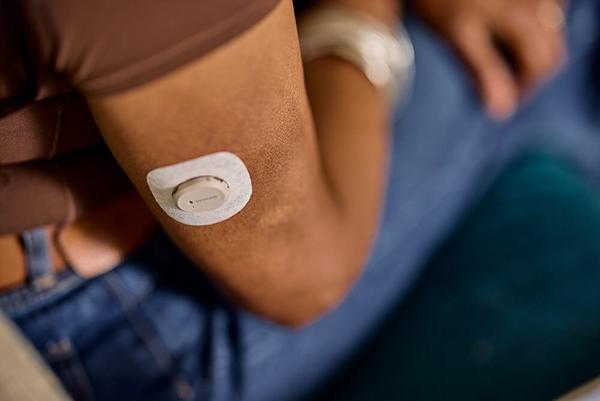
Hypothetically speaking, if you have Type 2 diabetes, are on several medications plus insulin, and visit your healthcare provider who tests your A1C and finds it elevated, that doctor will likely add more insulin or medications to your diabetes management routine.
But when you use Dexcom G7 CGM, you can see in real-time which foods are the most challenging to your glucose levels and the benefits of getting more regular physical activity. That can inspire you to make lifestyle changes at home, perhaps choosing water instead of soda or going for walks more regularly. And those actions Dexcom G7 inspired could decrease the amount of insulin you need and could lead to getting off of insulin.
Studies have shown, using CGM can help those with Type 2 diabetes better understand their glucose levels, resulting in more informed lifestyle decisions1 that can lead to improved glycemic control2-4 which can decrease your risk of complications5-6.
Get started on Dexcom G7
If you are living with diabetes and not using a CGM, we can help get you started. Click the button below to send us some basic information.
*If your glucose alerts and readings from Dexcom CGM do not match symptoms or expectations, use a blood glucose meter to make diabetes treatment decisions. 1 Dexcom data on file, 2025 2 Beck RW, et al. Ann Intern Med. 2017;167(6):365-374. 3 Martens T, et al. JAMA. 2021;325(22):2262-2272. 4 Lind N, et al. Diabetes Care. 2024;47(5):881-9. 5 Stratton IM, et al. BMJ. 2000;321(7258):405-12. 6 Holman RR, et al. N Engl J Med. 2008;359(15):1577-89.