
Real User Stories
Lance Bass' Journey from Diabetes Diagnosis to Healthier Tomorrows with Dexcom G7 15 Day
Published: Oct. 7, 2026
6 min read
A Diagnosis That Changed Everything
Lance Bass, a Grammy-nominated singer, best-selling author, TV host, dancer, actor, and producer, rose to fame in the late 1990s and early 2000s as a member of one of the best-selling boy bands of all time. In 2019, around age 40, he started experiencing unusual fatigue and excessive thirst. He thought it was just part of aging until his doctor diagnosed him with type 2 diabetes. It came during the COVID-19 pandemic, and it felt like one more thing being taken away. There was something uniquely disorienting about learning his body was working against him when everything else already felt uncertain.
What made the experience even more challenging was that his initial diagnosis of type 2 diabetes wasn't quite right. The journey to getting the correct diagnosis became a turning point—one that ultimately helped him better understand his body and what he actually needed to manage his glucose health effectively.
The Weight of Uncertainty
Lance eventually learned he was living with type 1.5 diabetes, also known as Latent Autoimmune Diabetes in Adults (LADA). Although millions of people worldwide are estimated to live with the condition, awareness remains limited1. With the new diagnosis came a flood of questions, and Lance quickly discovered that finding information tailored to his experience wasn't always easy.
Those first weeks after diagnosis were marked by overwhelming confusion. Lance wanted to do everything right.
Medical directives came from his healthcare team—important, authoritative, and sometimes abstract. But those weren't the only voices in his ear. Well-meaning advice streamed in from friends and family. Fitness influencers online claimed that a certain workout regimen would transform his metabolic health. Nutritionists promoted different diet philosophies. Articles about the latest supplements appeared in his feed. Conversations about tools to help manage diabetes he'd never heard of before suddenly seemed urgent and important.
The practical challenges were significant—learning about carbohydrate counting, understanding insulin sensitivity, and navigating medications. But underneath all of that was a persistent undercurrent: a creeping anxiety about whether he was doing any of this correctly.
Like many people newly diagnosed with diabetes, Lance found himself in a state of analysis paralysis. Too many options. Too many opinions. Not enough clarity about what his specific body actually needed.

Searching for the Right Tool for the Job: From Fingersticks to Freedom
At first, Lance tried the traditional approach to glucose monitoring: fingersticks—testing his blood sugar, getting a data point, adjusting accordingly. But it meant carrying supplies everywhere. It meant finding moments to test. It meant getting a single snapshot of his glucose at a particular moment, with no idea what happened before or after.
The real problem with fingersticks was what Lance describes as always "leaving without at least one piece of the puzzle." He'd test and see one number, but not the full picture of how his glucose levels changed throughout the day. Each fingerstick was just a moment, a single data point in isolation. Those isolated moments weren't enough.
Lance found himself constantly wondering: "Am I managing this right? What's happening to my glucose when I'm not testing?"
This is where his doctor's recommendation of the Dexcom G7 continuous glucose monitoring (CGM) system became crucial. Not just as a tool, but as a translator between what he learned in the abstract world of diabetes education and how to apply what he learned to the concrete reality of his life. This wasn't just another monitoring option. For Lance, it was the difference between guessing and knowing.
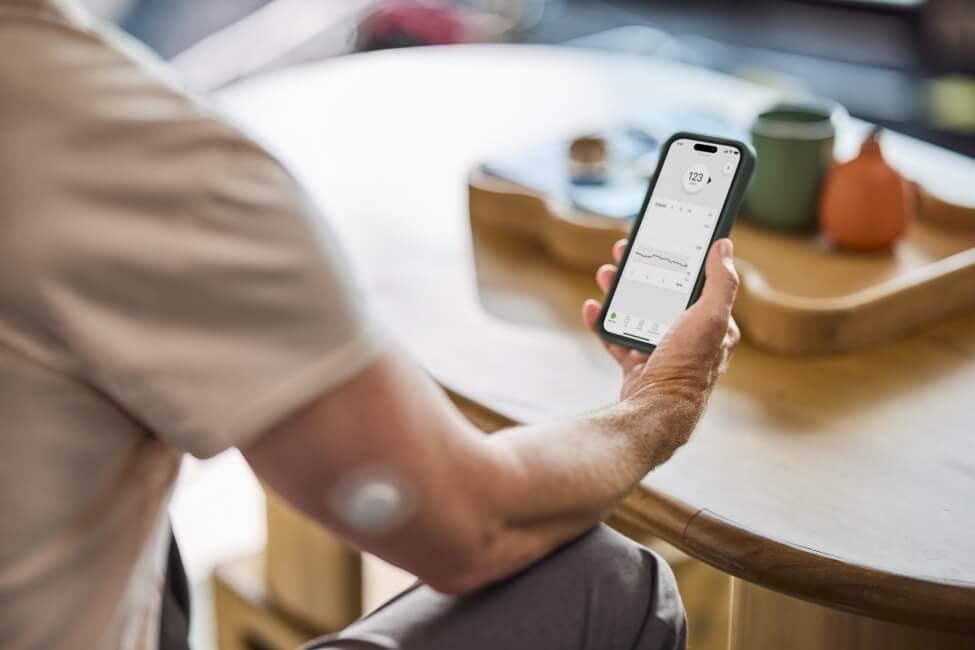
When he started using Dexcom G7, something fundamental shifted. He went from seeing data points to seeing patterns. He could understand what his glucose levels were doing continuously, all day and all night.
The Clarity that Comes with Seeing Patterns
For the first time, Lance had real information about himself—not general advice or theoretical guidelines, but what actually happens when he eats certain foods, does a specific workout, or manages stress around an upcoming project. Today, with the Dexcom G7 15 Day, those insights continue to evolve with a longer wear time* and improved accuracy2. The data is personal. It's his.
Lance also invited his mom, his husband, and his manager to follow his glucose data on their phones through the Dexcom Follow app†. Having the people closest to him—the ones who support and care for him—able to see his levels and receive alerts gave him an additional layer of peace of mind. They could see that he was okay.
Beyond sharing his glucose data with family, Lance could also share his glucose insights with his healthcare team through Dexcom Clarity‡. It gave his healthcare team evidence about how his body was actually responding to his diabetes management approach. Rather than relying on traditional A1C measurements that only capture a three-month average, the Dexcom G7 15 Day provided granular, continuous data. This wasn't Lance saying he thought he was doing okay. This was Lance showing his doctors exactly what was happening. This kind of clear communication gave both Lance and his medical team peace of mind.
One of the biggest discoveries came through pattern recognition. Lance noticed that his glucose always spikes when he eats "white foods"—sugar, white rice, bread. Things he loved, but now he knows their effect on his glucose levels. This wasn't theoretical. He could see it happening every single day in his data.
But the patterns went deeper than that. Through trial and error—guided by real data rather than guessing—Lance discovered what worked for his body. He found a diabetes community on social media that taught him strategies like starting meals with protein before eating carbs. He tested these approaches against his actual glucose patterns and could immediately see what made a difference.
Rather than relying on generic recommendations, he could personalize his approach using information unique to his own body and needs.
This was the real power of Dexcom CGM: it transformed him from someone following rules to someone making decisions. He wasn't a passenger being told where to go. He could actually see the road ahead. He could make informed choices instead of just hoping he was doing the right thing.
Moving from Confusion to Confidence
The real transformation wasn't about managing the diabetes itself in isolation. It was about moving from a state where his body was doing things he couldn't see to a state where he could understand what was happening and respond appropriately.
Previously, Lance had experienced episodes of waking up very fatigued, but they made more sense after his diagnosis. His glucose levels were dropping overnight, and he now had a better understanding of what his body was trying to tell him. With Dexcom G7 15 Day alerts, he had greater visibility into his glucose levels and could take action when needed. Knowledge transformed uncertainty into understanding, and understanding helped him feel more confident in managing his diabetes.
It wasn't that the diabetes became easy. It didn't. But it became knowable. Manageable. Something he could work with rather than something that was silently harming his body.
For Lance, Dexcom G7 15 Day has helped turn uncertainty into greater understanding. By giving him visibility into his glucose patterns throughout the day, it helps him feel more informed, confident, and prepared to work with his healthcare team to manage his diabetes.
A Silver Lining: A Voice for the Voiceless
Developing type 1.5 diabetes as an adult was confusing, but as his confidence grew, he realized he had something important to share. He'd never heard of type 1.5 before his own diagnosis, so his purpose became clear: to educate and advocate for others with LADA.
As one of the only public figures with LADA, Lance has heard directly from people who recognized their own symptoms in his story and caught their own type 1.5 diagnosis because of him. He speaks openly about the dangers of misdiagnosis and reminds others they don't have to navigate this alone. Beyond awareness, he shares the tools that have changed his life, like the Dexcom G7 15 Day, which gave him the clarity to understand his body and take control of his glucose health.
Get started on Dexcom G7 15 Day
Ready to see what Dexcom G7 15 Day can do for you? Talk with your doctor and take the first step with a free benefits check. Click below to answer a few quick questions and learn more.
1 Rajkumar V, Levine SN. Latent autoimmune diabetes. StatPearls. StatPearls Publishing. Updated June 21, 2022. https://www.ncbi.nlm.nih.gov/books/NBK557897/ *A study was conducted to assess the sensor life where 73.9% of sensors lasted the full 15 days. In other words, when using the product per the package labeling, approximately 26% of sensors may not last for the full 15 days. 2 Dexcom, Data on File, 2025 †Separate Dexcom Follow app and internet connection required. Internet connectivity required for data sharing. Users should always confirm readings on the Dexcom G7 app or receiver before making treatment decisions. ‡An internet connection is required for users to send their glucose data to Dexcom Clarity via a compatible smart device: www.dexcom.com/compatibility Healthcare providers will only be able to view a user’s glucose data if the user elects to share it with them through Dexcom Clarity.