
Managing Diabetes
Smart Snacking for Diabetes: How Fiber and Dexcom G7 Data Can Help Guide Your Choices
Published: Sep. 18, 2026
8 min read
Snacking Doesn't Have to Feel Complicated
It's mid-afternoon, you're looking for a snack, and suddenly you find yourself second-guessing every option in front of you. Will this keep you feeling satisfied? How might it affect your glucose?
If you have Type 2 diabetes, these everyday decisions, like choosing the best snack, can sometimes feel more complicated than they should. Constantly weighing choices and wondering what might happen next can turn a simple snack into a source of stress.
Fortunately, there are tools that can help take some of the uncertainty out of the equation. We'll cover what high-fiber snacks are good for people with diabetes, what to avoid, and how Dexcom CGM can help you choose the right snacks for you.
According to the American Diabetes Association’s Standards of Medical Care, individualized nutrition counseling is essential for managing diabetes.1 However, many people may still find it challenging to understand how specific foods affect their glucose levels in everyday life. In a survey of continuous glucose monitoring (CGM) users, 87% reported modifying their food choices based on CGM use, and 90% felt that CGM contributed to a healthier lifestyle.² When you log food alongside your glucose data, you can gain a clearer picture of how different foods may affect you, helping turn snack choices into a more informed, personalized experience.
Real-time glucose monitoring gives you the complete picture of how your snacks impact your glucose levels — and that's what enables you to make healthier choices when managing your diabetes. You'll see not just what to eat, but how different snacks actually impact your glucose levels. That's where Dexcom G7 and Dexcom G7 15 Day CGM systems come in—turning invisible biology into actionable insights.
Why Fiber Can Help You Lower Your A1C
To understand why high-fiber snacks matter so much for managing diabetes, it helps to understand what fiber does in your body.
Fiber works a little differently than other carbohydrates. Rather than being fully digested and absorbed, it passes through the body largely intact, helping slow how quickly glucose enters the bloodstream.
Soluble vs. Insoluble Fiber: Both Play a Role
Soluble fiber (found in oats, beans, apples, and berries) dissolves in water to form a gel-like substance. This gel slows down digestion and glucose absorption, which means your blood sugar rises more gradually after eating. This is especially valuable for Type 2 diabetes, as it reduces the demand on your pancreas to produce insulin quickly.
Insoluble fiber (found in whole grains, vegetables, and nuts) doesn't dissolve but adds bulk to your digestive contents, slowing overall digestion. Both types work together to create a more stable glucose response.
Research suggests that increasing dietary fiber intake may help support glycemic control, weight management, and other markers of metabolic health in people with type 2 diabetes.5 Higher fiber intake has been associated with more favorable CGM metrics, including greater time in range and improved glucose patterns, suggesting it may help support blood sugar control, although individual responses can vary.4 For those with type 2 diabetes, fiber interventions have been associated with reductions in HbA1c of approximately 0.47% and fasting glucose of about 17 mg/dL.7
The Gap: Why Most People Fall Short
Despite its power, most Americans don't eat nearly enough fiber. Current guidelines recommend 22–34 grams of fiber daily,8 yet the average American consumes only about 16 grams per day.9 For many people with diabetes, fiber is an often-overlooked nutrient that can help support a more gradual glucose response after eating.
The tricky part is knowing which snacks are rich in fiber and incorporating them into everyday eating habits in a way that feels realistic and sustainable for your lifestyle.
The Best High-Fiber Snacks for Diabetes
You'll notice a theme in the snacks below: the best snacks combine fiber with protein (and ideally, healthy fat). Here's why: when you eat carbohydrates alone, they digest quickly and glucose spikes. Add protein, and digestion slows. Add fiber and protein, and you get an even flatter glucose curve. Here are some great snacks to consider:
Snack | Carbs (g) | Protein (g) | Fiber (g) |
Apple + 1 Tbsp peanut butter | ~28 | ~4 | ~5 |
Roasted chickpeas (¼ cup) | ~18 | ~6 | ~5 |
Edamame (½ cup shelled) | ~10 | ~9 | ~4 |
Berries + Greek yogurt (½ cup berries + ¾ cup plain yogurt) | ~15 | ~17 | ~4 |
Hummus + vegetables (¼ cup hummus + raw veggies) | ~12 | ~5 | ~4 |
Avocado on whole-grain toast (1 slice) | ~20 | ~5 | ~7 |
Chia pudding (2 Tbsp chia seeds) | ~14 | ~5 | ~10 |
Mixed nuts (¼ cup) | ~8 | ~6 | ~3 |
Air-popped popcorn (3 cups) | ~18 | ~3 | ~3.5 |
Black bean dip + vegetables (¼ cup dip + veggies) | ~17 | ~6 | ~6 |
Snacks to Avoid— And How to Fix Them
Some snacks that are promoted as "healthy" may not provide as much fiber as you might expect. Foods like yogurt-covered raisins, rice cakes, fruit juice or juice-based smoothies, granola bars, veggie chips, refined-grain crackers, pretzels, trail mixes heavy on dried fruit or chocolate, and some breakfast cereals can be lower in fiber and higher in added sugars.
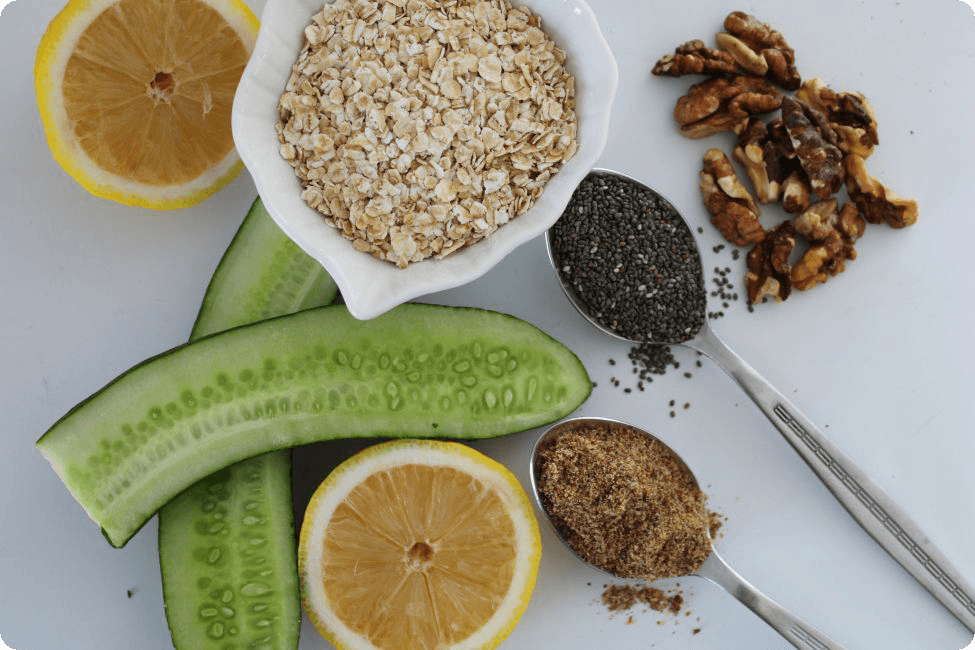
It's also worth noting that foods such as cottage cheese, string cheese, deli meats, and eggs are good sources of protein, but they don't naturally contain fiber. Pairing them with fiber-rich foods or adding a fiber supplement (like ground flaxseed, chia seeds, or psyllium husk) can be a simple way to increase the fiber content of snacks you already enjoy.
What the Data Actually Shows — With Dexcom G7
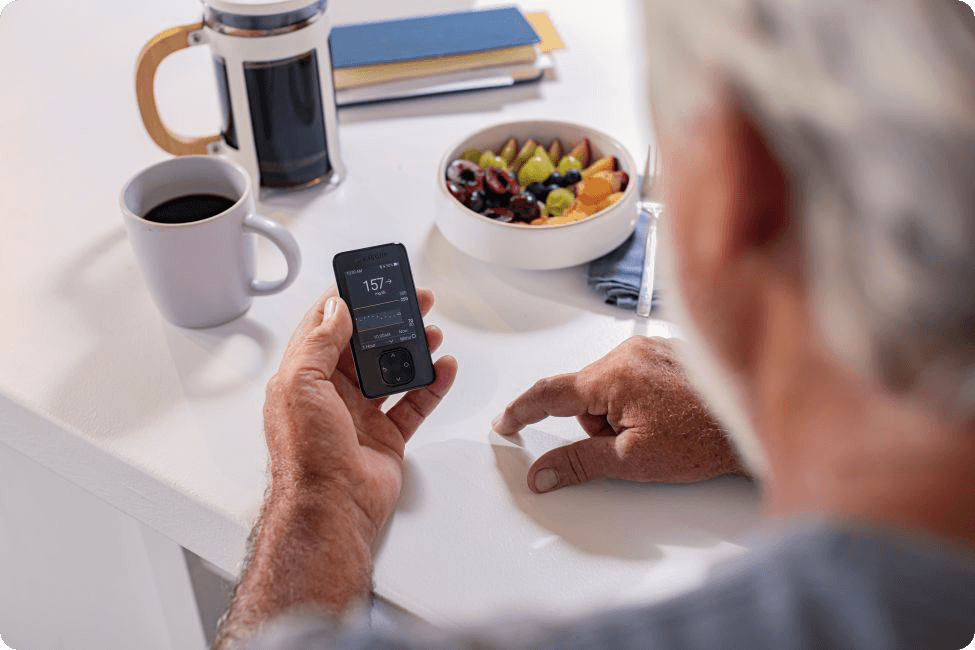
This is where the real shift can happen. Dexcom G7 CGM provides glucose readings every 5 minutes, displayed on your phone or compatible smart device*. This means you can actually watch how a high-fiber snack affects your glucose curve compared to a snack without fiber—or compare a snack eaten alone versus paired with protein.
How to Use Dexcom G7 to Test Your Snacks
- Log your meals and activities and watch the trend graph to see if glucose rises sharply, gradually, or stays flat
- Check the Trends tab over time to identify which snack combinations keep your levels stable
- Observe what works for your body — because everyone's glucose response is different
- Stress can raise your glucose levels, so if you snack when stressed, your spike might be stress-related rather than snack-related— log how you’re feeling and your trend data can help you tell the difference
Over time, this data builds confidence. You stop guessing and start knowing what works for your body. And because everyone's glucose response is slightly different—based on factors like insulin sensitivity, activity level, and stress—this personalized feedback is invaluable.
Dexcom G7 and Dexcom G7 15 Day provide ongoing glucose insights that may help support positive behavior changes over time.2 The longer you wear them, the more patterns emerge—and the clearer your path to sustainable, personalized snacking becomes.
Making It a Habit (Without Overthinking It)
Here are practical strategies to make high-fiber snacking part of your routine:
Simple Swaps
- Instead of a granola bar, grab a handful of mixed nuts + a piece of fresh fruit
- Swap yogurt-covered raisins for whole berries + plain Greek yogurt
- Replace rice cakes with whole-grain crackers + hummus
- Choose air-popped popcorn over veggie chips
Snack-Prep Tips:
- Pre-portion nuts and seeds into small containers for grab-and-go convenience
- Chop vegetables on Sunday and pair them with hummus or bean dip for the week
- Keep hard-boiled eggs on hand and pair them with an apple or handful of berries for fiber
- Make overnight chia pudding in mason jars for quick breakfasts or snacks
Use Your Data
After a few weeks of wearing Dexcom G7 and logging your snacks and activities, patterns will emerge. If a snack consistently keeps you in range, make it a staple. If it causes a spike, pair it with more protein or reconsider it. Notice which meal-snack combinations work best for your schedule and activity level.
Dexcom Warrior, Melissa, found this to be true, “Before I started paying attention to how different foods affected my glucose, I constantly wondered, ‘What can I eat?’
Now I plan for high fiber snacks and pair them with protein when I’m out hiking or out exploring because I’ve learned they help me feel energized and satisfied. My Dexcom G7 gave me the confidence to understand what works for my body, so I can focus on making memories outdoors instead of stressing about food.”
The Bottom Line: Snacking as a Win, Not a Worry
Fiber-rich snacks can be a simple way to support your overall nutrition goals and promote a more gradual glucose response after eating. Because fiber slows digestion and glucose absorption, it can play an important role in helping you understand how different foods work for your body.
Of course, knowing that fiber matters is only part of the picture. Seeing how those food choices affect your own glucose levels can provide an even deeper level of understanding.
That's where Dexcom G7 and Dexcom G7 15 Day come in. By pairing nutrition strategies with real-time glucose insights along with food and activity logging, you can better understand how meals, snacks, and everyday choices influence your glucose and diabetes.
Instead of relying on guesswork, you can make food decisions with greater awareness and confidence based on data that's unique to you.
Learn More About Dexcom G7
Dexcom continuous glucose monitoring is clinically proven to lower A1C and increase time in range.8-12 By helping you see how food, activity, and other daily factors affect your glucose in real time, Dexcom G7 can provide insights that may help support informed choices and positive behavior changes over time.2
Whether you're newly diagnosed or working to optimize your current management, Dexcom G7 and Dexcom G7 15 Day provide the visibility you need to make snacking—and managing diabetes overall—something you can feel genuinely good about.
Get a Free Dexcom G7 Trial
Are you living with diabetes and not using CGM? Talk to your doctor about Dexcom G7 15 Day. We can also help you get started with a free benefits check. Click the button below to send us some basic information.
*Compatible smart devices sold separately. To view a list of compatible devices, visit Dexcom compatibility.1 American Diabetes Association Professional Practice Committee. Facilitating positive health behaviors and well-being to improve health outcomes: Standards of Care in Diabetes-2026. Diabetes Care. 2026;49(Suppl 1):S89-S131. doi:10.2337/dc26-S005. 2 Ehrhardt N, Al Zaghal E. Continuous glucose monitoring as a behavior modification tool. Clin Diabetes. 2020;38(2):126-131. doi:10.2337/cd19-0037. 3 Nitzke D, Czermainski J, Rosa C, et al. Increasing dietary fiber intake for type 2 diabetes mellitus management: a systematic review. World J Diabetes. 2024;15(5):1001-1010. doi:10.4239/wjd.v15.i5.1001. 4 de Wit DF, Fuhri Snethlage CM, Rampanelli E, et al. Higher fibre and lower carbohydrate intake are associated with favourable CGM metrics in a cross-sectional cohort of 470 individuals with type 1 diabetes. Diabetologia. 2024;67(10):2199-2209. doi:10.1007/s00125-024-06213-5. 5 Lu K, Yu T, Cao X, et al. Effect of viscous soluble dietary fiber on glucose and lipid metabolism in patients with type 2 diabetes mellitus: a systematic review and meta-analysis on randomized clinical trials. Front Nutr. 2023;10:1253312. doi:10.3389/fnut.2023.1253312. 6 Centers for Disease Control and Prevention. Fiber: The Carb That Helps You Manage Diabetes. Updated May 15, 2024. 7 Hoy MK, Goldman JD. Dietary fiber intake of the U.S. population: What We Eat in America, NHANES 2009-2010. Food Surveys Research Group; 2014. 8 Beck RW, Riddlesworth T, Ruedy K, et al. Effect of continuous glucose monitoring on glycemic control in adults with type 1 diabetes using insulin injections: the DIAMOND randomized clinical trial. JAMA. 2017;317(4):371-378. doi:10.1001/jama.2016.19975. 9 Beck RW, Riddlesworth TD, Ruedy K, et al. Continuous glucose monitoring versus usual care in patients with type 2 diabetes receiving multiple daily insulin injections: a randomized trial. Ann Intern Med. 2017;167(6):365-374. doi:10.7326/M16-2855.10 Martens T, Beck RW, Bailey R, et al. Effect of continuous glucose monitoring on glycemic control in patients with type 2 diabetes treated with basal insulin: a randomized clinical trial. JAMA. 2021;325(22):2262-2272. doi:10.1001/jama.2021.7444. 11 Garg SK, et al. Diabetes Technol Ther. 2025;27(6):413-502. 12 Welsh JB, et al. J Diabetes Sci Technol. 2024;18(1):143-147.