
Managing Diabetes
Navigating Eating Out with Diabetes: Your Guide to Confident Food Choices
Published: May 13, 2026
7 min read
We get it—food decisions happen fast. Whether you're rushing between meetings, celebrating at a social event, or facing limited options at the airport, making choices that support your health can feel overwhelming. But here's the truth: success isn't about perfection. It's about building practical patterns you can repeat.
Living with diabetes doesn’t mean you have to skip your favorite foods or avoid social situations like eating at restaurants or attending events. Instead, it's about understanding portion sizes, discovering flavor strategies that work for you, creating social "game plans," and using tools like Dexcom G7 and Dexcom G7 15 Day, to make food choices feel easier. With real-time glucose insights, you can transform uncertainty into confidence, turning each meal into an opportunity to learn what works best for your body.
Building Confidence with Portion Control Knowledge
Understanding Portions vs. Servings
The difference between portion size and serving size is simpler than you might think. A serving size is the standardized amount listed on nutrition labels, while a portion is what you actually choose to eat.
You have complete control over your portions, and understanding this distinction is the first step toward feeling more confident about your food choices.
The Plate Method: Your Visual Guide
The American Diabetes Association (ADA) offers some helpful recommendations for building a balanced plate that can help manage glucose levels.1
Using a "reasonably sized" plate—they recommend about 9 inches across—divided into three food categories:
- ½ of your plate: Non-starchy vegetables like spinach, broccoli, or carrots. High in fiber and low in carbohydrates, these foods are filling without significantly impacting glucose levels.
- ¼ of your plate: Protein foods such as lean meats, fish, eggs, or plant-based proteins
- ¼ of your plate: Starchy carbohydrates including whole grains, potatoes, or legumes

Portion "Upgrades" That Don't Feel Restrictive
Think of portion adjustments as upgrades, not limitations. Try prioritizing vegetables and protein first—this naturally leaves appropriate space for other foods you enjoy. Remember, you can absolutely eat your favorites; it's simply about planning the portion thoughtfully.
Balancing Flavor and Fun
The Power of Healthy Fats
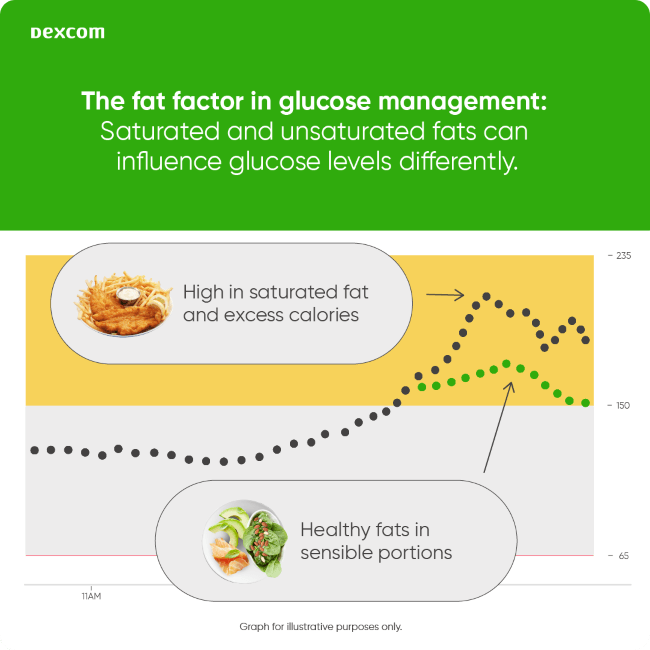
Think of healthy fats as premium building blocks for your body—they help provide sustained energy and play an important role in overall metabolic health. Just as a strong foundation supports a house, the right types of fats can help support steadier blood glucose patterns as part of a balanced lifestyle.
While fats are an essential part of any eating pattern, the type of fat you choose matters—especially when it comes to blood glucose and heart health. That’s why prioritizing “healthy fats” is key. Sources of healthy fats include nuts, peanut and almond butter, and olives, while foods like eggs provide a mix of fats along with other important nutrients.
Unsaturated Fats
Often referred to as “healthy fats,” unsaturated fats are associated with improved insulin sensitivity and reduced inflammation, which can support better glucose management. They’re also heart‑healthy and help lower LDL cholesterol. Key sources include avocados, nuts, seeds, olive oil, and fatty fish, like salmon.
Saturated Fats
When consumed in excess, saturated fats may interfere with insulin signaling, potentially contributing to insulin resistance over time. These fats are commonly found in foods like butter, certain processed foods, and fatty cuts of meat, such as ribeye.
To round out meals, balancing fat choices with lean protein and fiber‑rich carbohydrates can further support steadier glucose levels.
Choose Your "Yes"
A helpful tip: pick one thing you're genuinely excited about—whether it's a special drink, appetizer, or dessert—and build the rest of your meal around it. This strategy lets you enjoy what matters most while maintaining balance elsewhere.
Remember this important mindset: one meal doesn't define your health—your habits do. Each food choice is simply data that helps you understand your body better.
Social Situations and Eating Out
Pre-Planning for Success
Consider enjoying a balanced snack or mini-meal that fits with your health goals before heading out, so you don't arrive feeling ravenous. If it's appropriate for the occasion, bringing a dish you'd genuinely want to eat can ensure you have at least one option you feel great about.
Your Plate Strategy
Whether you're facing a buffet spread or ordering from a menu, having a clear approach helps you feel prepared and confident. Think of this as your personal game plan—something that becomes second nature with practice.
Before you eat:
- Take one lap around the buffet or review the entire menu before making decisions
- Build your plate using the plate method logic (vegetables and protein first)
- Choose smaller servings of richer items—you can absolutely have them, just in mindful amounts
- Identify your "best available" food choices, focusing on protein and vegetables when possible
Smart Menu Navigation
When you're scanning restaurant menus, these strategies can help you feel more confident about your food choices:
- Look for these preparation methods:
· Grilled, roasted, baked, or steamed options
· Items described as "fresh," "seasonal," or "house-made"
· Dishes that highlight vegetables or lean proteins - Make these simple requests:
· Ask for sauces and dressings on the side
· Consider substitutions like extra vegetables instead of fries
· Inquire about preparation methods if they're not clear - Consider portion strategies:
· You don't have to finish your entire plate—eat until you're satisfied, and take the rest home
· Share larger dishes with dining companions
· Order appetizer-sized portions as your main course
Your Backup Plan
For those moments when options feel limited, consider having backup snacks in your bag—nuts, cheese sticks, or jerky—to help bridge the gap until your next balanced meal.
The ultimate goal is to enjoy your meal and the company of friends and family while letting Dexcom G7 and Dexcom G7 15 Day help you learn over time. Progress over perfection, always.
Using Dexcom G7 and Dexcom G7 15 Day to Make Informed Food Choices
Understanding Your Patterns
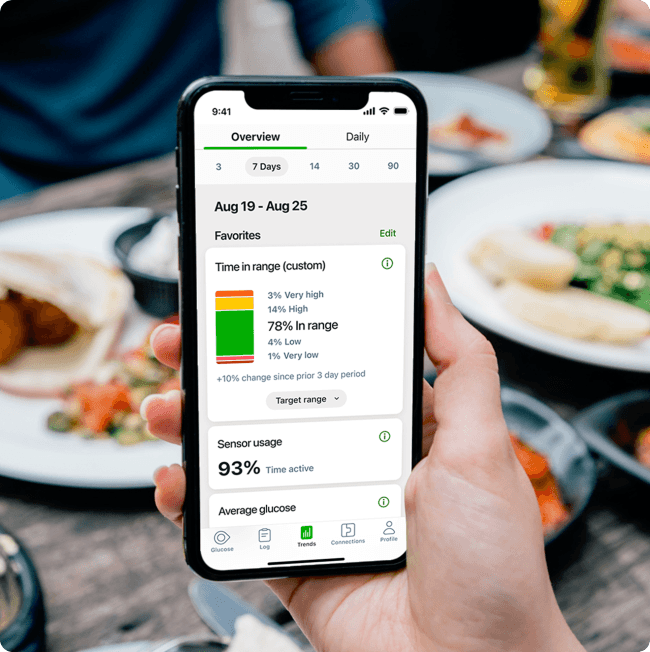
Your glucose patterns are influenced by a combination of meals, activity, and timing. The beauty of continuous glucose monitoring (CGM) is seeing how these elements work together uniquely for your body. Time in Range (TIR) can help you see progress beyond focusing on any single number, giving you a broader picture of your glucose management success.
Smart Logging Features
The Dexcom G7 and Dexcom G7 15 Day smart logging features with the Dexcom G7 app* allow you to capture comprehensive data about your daily experiences in ways that feel natural and convenient.
Event Logging: Track meals, activity, insulin, medications, plus notes and emojis for context. This helps you identify what works best for your individual needs.
Smart Food Logging: Take a photo of your meal and let AI identify ingredients and populate the meal description. This convenient tool makes tracking effortless while providing valuable data for future reference.
Your Three-Step Approach
- Before eating: Glance at where your glucose is starting—this provides helpful context for your decisions.
- During your meal: Focus on enjoying your food and the moment. Let the technology work in the background while you savor the experience.
- After eating: Look back later to learn patterns. What worked well? What surprised you? This reflection helps build your personal database of food responses.
Leveraging the Trends Tab
The Trends tab consolidates key metrics including TIR, GMI (Glucose Management Indicator), average glucose, and sensor usage across multiple timeframes. This feature is designed to make reviewing patterns easier within the app, helping you spot trends and celebrate progress over time.
Guide Your Journey
Living well with diabetes isn't about restriction—it's about making informed choices that let you enjoy life's pleasures while supporting your health goals. Eating out can absolutely remain a source of joy, connection, and culinary exploration.
With thoughtful portion strategies, an understanding of how different foods affect your body, and the real-time insights from Dexcom G7, you're equipped to navigate any dining situation with confidence. Remember, every meal is an opportunity to learn something new about yourself and to build habits that serve you well.
Your journey with food and diabetes is uniquely yours. Use these tools and strategies as your foundation, but always trust your body's signals and work with your healthcare team to create an approach that feels sustainable and enjoyable. After all, the best lifestyle choices are the ones you can maintain with confidence and joy, meal after meal.
1 American Diabetes Association. Tips for eating well. Retrieved from: https://diabetes.org/food-nutrition/eating-healthy *Compatible smart devices sold separately. To view a list of compatible devices, visit https://www.dexcom.com/compatibility